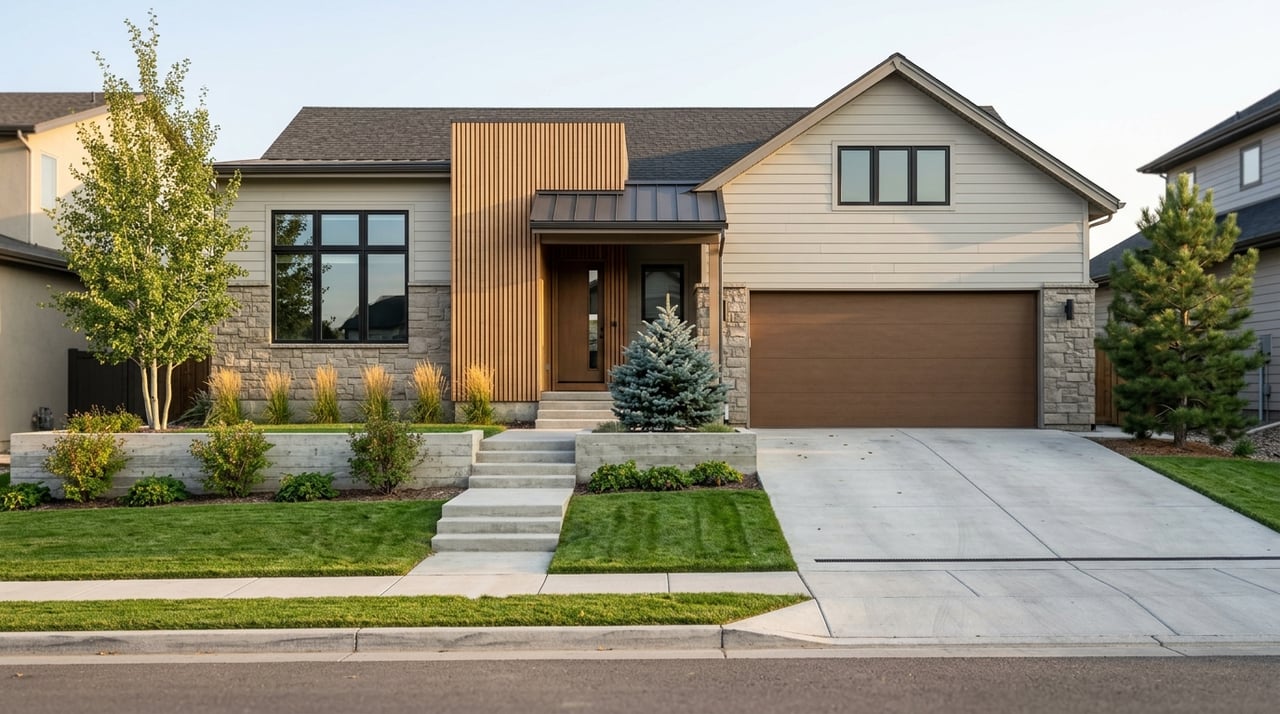
How To Choose The Right Lot For A Littleton Custom Home
June 18, 2026
June 18, 2026
Buying a custom-home lot in Littleton can feel exciting right up until the details start stacking up. A parcel that looks perfect on first glance can come with zoning limits, floodplain review, utility work, or permit costs that change your design and timeline. If you want to make a smart land purchase, you need to look beyond size and views and understand what the lot will actually allow. Let’s dive in.
Before you think about floor plans or finishes, confirm where the lot actually sits and which rules apply. In Littleton, a Littleton mailing address does not automatically mean the parcel is inside city limits, and that can affect the review path.
Littleton’s Unified Land Use Code is character-based, which means zoning is not just about use. It also addresses density, layout, scale, form, and building coverage. For a custom home, that can shape what you are realistically able to build long before plans are submitted.
Some parcels in Littleton are subject to a Planned Development Overlay, often called PL-O. These parcels can have subdivision-specific standards for uses, setbacks, lot size, and height.
That matters because two lots that look similar on paper may allow very different home designs. If you are comparing options, make sure you review the parcel-specific rules early rather than assuming the standard zoning district tells the whole story.
If a lot is in a historic district, that does not automatically rule it out for new construction. Littleton allows new construction in historic districts, but the project may need compatibility review so exterior changes fit the district’s established character.
The city maintains separate design guidelines for Downtown Littleton, Arapaho Hills, and Louthan Heights. If you are drawn to an infill opportunity in one of these areas, this step should be part of your early due diligence.
Some lots need planning review before permits can even be accepted or issued. Littleton also states that some lots that do not comply with Chapter 6 may require a separate subdivision application.
For new structures, the city will not issue a building permit unless the property has been platted in accordance with subdivision standards. In practical terms, that means raw land or unusually configured parcels can carry extra steps before your build begins.
Topography is not just a design issue in Littleton. It affects grading, drainage, utility layout, engineering, and cost.
The city requires grading and utility plans to show contours, floodplains, retaining walls, and utility locations. A grading permit is required when the disturbed area exceeds 5,000 square feet or 50 cubic yards, and larger disturbances may trigger additional erosion-control and drainage documentation.
A sloped lot can create great architecture, better separation from neighbors, or a walkout lower level. It can also increase retaining-wall work, drainage planning, and site-prep costs.
If site work expands beyond one acre, a state stormwater permit may also be required. This is one reason the right lot is not always the cheapest one on a price-per-square-foot basis.
Flood risk in Littleton is a local issue, not just a box to check on a national map. The city tracks both FEMA and local floodplains, and local floodplains appear on the zoning map as FP-O.
If a parcel is affected, floodplain development requires a floodplain permit. Some projects may also require a no-rise certificate or a public hearing, and Littleton’s standards can be more stringent than FEMA or the Colorado Water Conservation Board.
Lot orientation affects how your home feels every day. It can influence natural light, glare, cooling load, and how outdoor spaces perform in different seasons.
The U.S. Department of Energy notes that north-facing windows typically provide even light with minimal glare and low summer heat gain. East- and west-facing windows can create more glare and more summer heat gain, which makes orientation a practical design choice, not just a preference for a certain view.
If you want bright morning light in the kitchen, shaded afternoon outdoor living, or more balanced natural light throughout the day, the lot orientation matters. Passive-solar design, shading, daylighting, and nighttime ventilation can also help manage comfort and energy use.
For a custom build, this is where a lot should support how you want to live, not just where you want the house to sit.
Some site realities affect your home before design selections even begin. Littleton’s residential submittal requirements flag a 136 mph design wind speed and a 38 psf minimum ground snow load.
Those standards can influence roof structure, engineering, and budget. If you are comparing a simple flat lot to a more exposed parcel, these details are worth discussing early with your builder and design team.
Utilities are one of the biggest hidden variables in a custom-home lot purchase. You want to know what is available, what needs to be extended, and what legal constraints may shape the site plan.
In Littleton, all city residents are serviced by Denver Water, and a new water tap inside city limits must be acknowledged by the city before Denver Water issues it. For sewer, some properties may need to buy a district sewer tap first and then a city tap, depending on the sanitation district.
On custom lots, especially infill parcels, sewer line responsibility can be a meaningful cost item. Littleton states that the property owner is responsible for the sewer service line between the street main and the building.
If the age or condition of the line is unknown, the city advises that it should be checked. On an older parcel, that can mean one more line item to budget for before construction starts.
Littleton’s site-plan rules expect utilities to be underground, with no new overhead services unless a special agreement exists. The city may also require executed easements from adjacent owners or utility providers before approval.
That means a lot with utility conflicts or missing easement rights can become more complicated than it first appears. Your plan set also needs to show all existing and proposed utility locations, so it pays to sort this out early.
A beautiful lot can still be the wrong lot if the fee stack pushes the project beyond your comfort zone. In Littleton, fees are a real part of the land decision.
As of February 17, 2026, the city’s land development impact fee for a single-family home is $8,389.79 per unit, due at building permit issuance. Building permit fees are valuation-based, the plan review fee equals 65% of the permit fee, and city use tax plus Arapahoe County Open Space Tax are also assessed.
Fees are only part of the approval picture. Littleton states that many development applications begin with a pre-application meeting and a neighborhood meeting.
The city also says permits are not issued until a required pre-construction meeting is completed. Depending on the project, you may also need a construction schedule, staging plan, traffic control plan, phasing plan, and neighborhood communication plan before work begins.
Infill parcels and newer community lots each solve different problems. The right choice depends on your priorities, your builder’s technical strengths, and how much complexity you are willing to take on.
Infill lots can offer established surroundings and strong location appeal. They can also trigger demolition, historic compatibility review, floodplain review, utility cleanup, or separate subdivision work.
Lots in newer communities or on PL-O parcels can be more predictable from a civil-engineering standpoint. Even so, they are not automatic yeses.
A PL-O can impose unique standards created by the original developer and approved by City Council. You still need to read the parcel-specific rules closely before moving forward.
If you are narrowing down custom-home lots in Littleton, use this sequence to keep surprises down:
This order matters because lot choice can shape your design freedom, approval path, and delivery timeline.
The best lot for a Littleton custom home is not always the largest one or the one with the best first impression. It is the lot that fits your goals, your design, and the city’s review path without adding avoidable grading, utility, or entitlement issues.
That is where construction knowledge matters. When you can evaluate a lot through both a real estate lens and a buildability lens, you make better decisions earlier and reduce friction later.
If you are considering a custom-home lot in Littleton and want a clear, construction-informed second opinion, connect with Charles Ward for guidance on land, buildability, and the buying process.
Stay up to date on the latest real estate trends.
Contact Charles today to learn more about his unique approach to real estate, and how he can help you get the results you deserve.

5600 S QUEBEC ST STE 150D GREENWOOD VILLAGE CO 80111