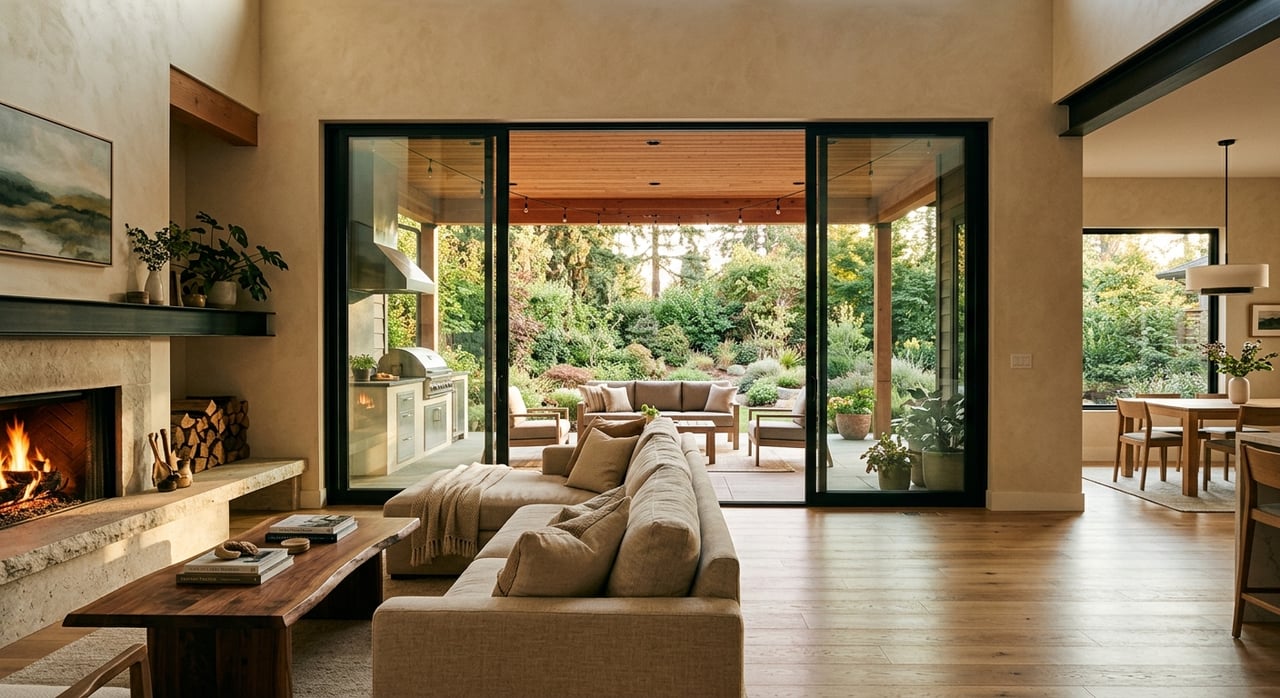
Timing Your Move‑Up Sale In The Lone Tree Luxury Market
July 16, 2026
July 16, 2026
If you are planning to sell your current home and buy your next one in Lone Tree, timing can feel like the hardest part. You want to protect your equity, avoid unnecessary carrying costs, and line up your next move without rushing a major decision. The good news is that Lone Tree’s luxury market gives you enough activity to make a move, but enough pricing pressure that strategy matters. Let’s dive in.
A move-up sale works best when you treat timing as more than just picking a month on the calendar. In Lone Tree, the market is active, but the luxury segment does not always move at the same speed as the overall city numbers.
Public data shows a mixed picture. Realtor.com reported a median listing price of $850,000, 136 homes for sale, and a median 38 days on market in June 2026. Redfin’s May 2026 snapshot showed a median sale price of $839,498 and 22 days on market, while Redfin’s luxury search pages showed about 63 homes and a longer 54-day market time.
That difference matters if you are selling a move-up or luxury property. It suggests that higher-end listings in Lone Tree can take longer to sell than the city average, even when the broader market still feels active.
It is easy to assume that waiting for the “best” week will solve everything. In reality, your pricing and launch plan usually matter more than trying to hit a perfect date.
Realtor.com’s 2026 research identified April 12 through 18 as the strongest national listing window, and spring tends to produce better sale-to-list ratios than winter. But that same research also found that homes closing about four weeks after listing performed best on average, while listings that lingered 18 weeks or more performed worst.
For Lone Tree sellers, that supports a simple idea: you want to come to market ready. A polished launch, fresh valuation, and disciplined pricing strategy can do more for your result than waiting and hoping the market lifts your number.
A higher price point does not remove buyer scrutiny. In fact, it often increases it.
Redfin reported a 98.6% sale-to-list ratio in Lone Tree, along with 39.7% of homes showing price drops. Douglas County’s March 2026 MLS-based report also showed single-family homes receiving 98.8% of list price, with 2.5 months of supply and 64 days on market year to date.
Those numbers point to a market where serious buyers are still active, but overpricing can lead to reductions. If you are moving up from one high-value home to another, preserving leverage often starts with pricing your current home correctly from day one.
The best time to list depends on your next move, not just the season. Your timeline should match how quickly you need proceeds, how much flexibility you have, and whether your next home is a resale or a new build.
In a broad sense, spring can still offer an advantage. But Lone Tree’s current market data suggests launch readiness matters more than chasing a narrow seasonal window, especially in luxury price bands where homes may sit longer than average.
A practical listing plan usually starts 30 to 60 days before you want to be fully active. That gives you time to confirm value, prepare the home, refine presentation, and build a strategy around your purchase timeline.
If most of your down payment for the next home depends on selling your current one, listing earlier usually reduces stress. It gives you more time to attract the right buyer and avoids making your next purchase under pressure.
This matters in Lone Tree because inventory is not unlimited, yet luxury listings can still take time to sell. A rushed listing often creates the very delays sellers hope to avoid.
If your home needs repairs, staging, or a sharper presentation, it may be worth delaying briefly to launch in stronger condition. Buyers in the move-up and luxury segment pay attention to finish quality, maintenance, and how a home compares to newer product.
That is where a construction-informed review can help. Small updates, deferred maintenance fixes, and a clean pricing story can improve your position without over-improving the property.
For most move-up sellers, the real question is not just when to list. It is how to sequence both sides of the move with the least risk.
In general, there are three common paths:
Each path can work, but the right fit depends on your equity, cash position, lender guidance, and the timeline of your next property.
A sale-first approach often makes sense when most of your buying power is tied to your current home. This path can help you protect equity and make decisions with real numbers instead of assumptions.
It can also reduce the chance of carrying two properties at once. In a market where luxury homes may take longer to sell, that lower-risk approach is often the cleanest choice.
A buy-first strategy can work if you have strong liquidity and lender support. It may be attractive if the right replacement property appears before your current home is on the market.
CFPB guidance describes bridge or swing loans as temporary financing that can help fund a down payment on a new home and then be repaid from the sale of your existing home. That option can create flexibility, but it only makes sense when your income, equity, and financing structure support the overlap.
Some sellers aim to line up both transactions close together. This can work well when you have a committed buyer, a clear contract timeline, and a replacement home that is truly ready on schedule.
The challenge is that synchronized moves leave less room for surprises. Inspection issues, lending delays, or a shifting builder timeline can quickly affect both sides of the plan.
If your move-up purchase involves new construction, timing gets more technical. Lone Tree’s new-build pipeline is centered in RidgeGate, which the city describes as a 3,500-acre planned development and the largest growth area in the city.
The city reports that RidgeGate is home to nearly 5,000 residents today and is expected to reach 30,000 residents and 50,000 jobs at buildout. The east side includes three residential villages, the new City Center, parks, schools, and public facilities, while the Southwest Village and Lyric community is planned for more than 1,800 homes and the Central Village Couplet area is already under construction.
That creates opportunity, but it also means timelines can move. The city’s active land-use pipeline includes projects like the Hillcamp RidgeGate rural-residential preliminary plan, and the Unified Development Code update is scheduled through December 2027.
If your next home is being built, confirm the details before you put your current home on the market. A strong move-up plan usually includes answers to these questions:
CFPB guidance also notes that builders may ask for an upfront deposit on a not-yet-built home, and buyers should ask when that deposit is refundable. It also states that you do not have to use a builder’s affiliated lender.
In Lone Tree, a strong move-up strategy is usually less about predicting the market and more about preparing for it. The luxury segment is active, but it still rewards realistic pricing, polished presentation, and clear sequencing.
That is especially true when public market trackers do not all tell the same story. Some sources describe Lone Tree as warm or seller-friendly, while others show buyer-favorable conditions in parts of the area, which is why a neighborhood-specific valuation matters more than a generic headline.
A practical plan often includes:
Move-up sales in the luxury market are rarely simple. You are balancing value, presentation, timing, financing, and often a second transaction that has its own moving parts.
That is where experienced guidance matters. Charles Ward’s construction background, luxury listing practice, and work across south metro Denver can help you evaluate condition, understand buyer expectations, and coordinate a plan that fits both your current home and your next one.
If you are thinking about selling in Lone Tree and moving into a larger resale, a custom home, or a new build, the best first step is a clear plan built around your numbers and timeline. To start that conversation, connect with Charles Ward.
Stay up to date on the latest real estate trends.
Contact Charles today to learn more about his unique approach to real estate, and how he can help you get the results you deserve.

5600 S QUEBEC ST STE 150D GREENWOOD VILLAGE CO 80111