Highlands Ranch Outdoor Living Ideas That Add Appeal
May 14, 2026
May 14, 2026
If you live in Highlands Ranch, your backyard can do a lot more than hold a grill and a few chairs. In a community shaped by trails, open space, big skies, and active outdoor routines, a well-planned yard can feel like a true extension of your home. Whether you want a more comfortable place to entertain, a lower-maintenance landscape, or upgrades that support resale value, the right ideas start with how outdoor living works here. Let’s dive in.
Highlands Ranch is built around outdoor access. The community includes 26 parks, more than 70 miles of trails, 2,644 acres of open space, four recreation centers, and an 8,200-acre Back Country Wilderness Area.
That setting shapes buyer expectations and daily life. For many homes, especially the 4,767 properties that back to parks or open space, the yard is not just private exterior space. It is part of a larger Colorado lifestyle that blends indoor comfort with outdoor use.
Outdoor living in Highlands Ranch works best when it responds to the local climate. The NOAA station in Highlands Ranch reports 18.18 inches of annual precipitation, and Colorado State University Extension notes that local landscapes deal with intense sun, low humidity, temperature swings, wind, and challenging soils.
That means the most successful yards usually prioritize shade, wind buffering, water-wise planting, mulch, drip irrigation, and carefully sized lawn areas. It also means flashy ideas often matter less than durable materials, smart placement, and a layout that holds up through changing weather.
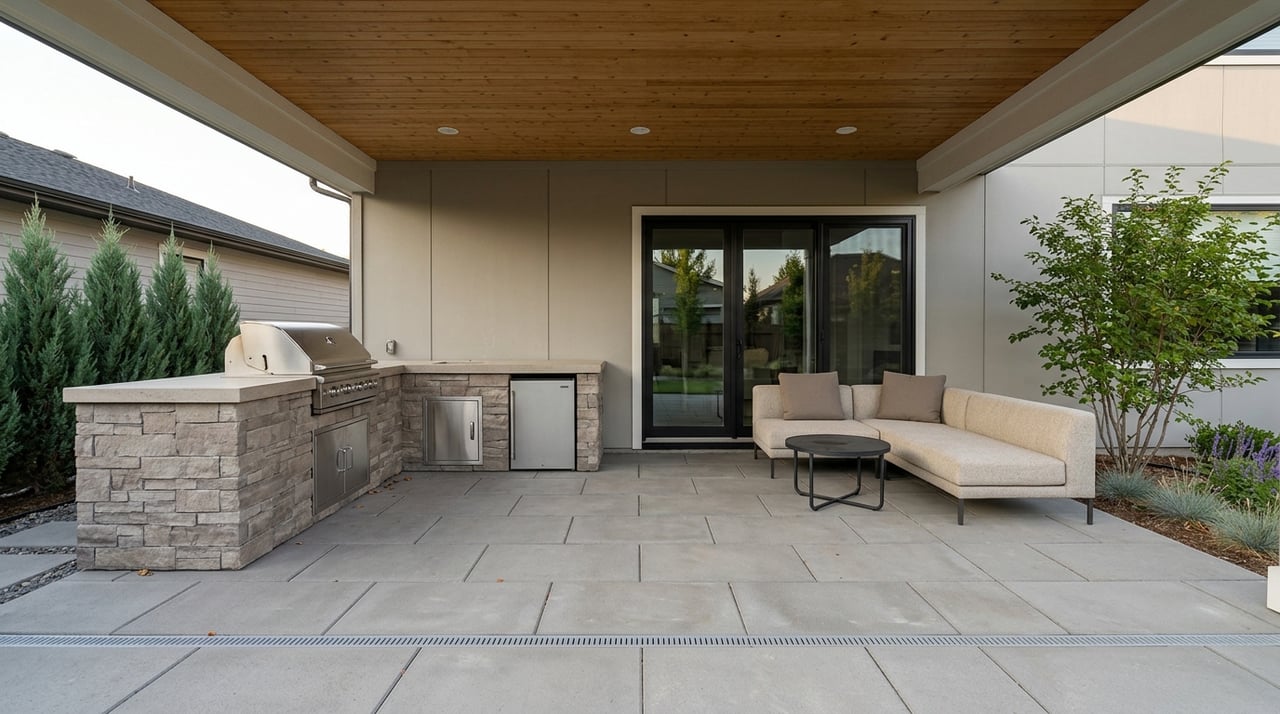
A patio that looks good in spring but feels too hot or windy in summer will not get used as often as you hoped. Covered patios, solid patio covers, and well-placed deck covers can make outdoor space more comfortable during bright afternoons and cooler evenings.
In Highlands Ranch, these features also need to fit the home and lot. HRCA guidelines say new or replacement decks and solid deck or patio covers require approval, and plans are typically expected to be centered behind the house, proportionate to the lot, and designed with materials and rooflines that complement the home.
Even though Highlands Ranch is relatively dry overall, spring and summer tend to bring the wetter months. That makes drainage worth addressing at the start, especially when adding patios, paving, or planting beds.
A polished backyard should not send water toward the home, the fence line, or neighboring properties. HRCA requires approval for patios, hardscape, and drainage changes, so design and grading should work together from day one.
The best outdoor spaces in Highlands Ranch usually feel simple, usable, and well matched to the setting. Here are a few ideas that align well with local conditions and local rules.
A covered patio is one of the strongest upgrades for daily comfort. It gives you shade during high-sun hours, helps define an outdoor room, and can make entertaining easier from late spring into fall.
For move-up and luxury homes, this type of feature can also strengthen how the backyard presents as part of the overall property. Buyers often respond well to outdoor spaces that feel finished and purposeful, especially when materials and rooflines tie cleanly back to the house.
If you want filtered shade and architectural interest without a full solid cover, a pergola may be worth considering. In Douglas County, some pergolas and ornamental garden structures may be permit-exempt if they are not subject to a uniform snow load, but county rules and HRCA approval still matter.
This makes pergolas a good option for homeowners who want definition and ambiance while keeping the structure visually lighter. They can work especially well over a dining area, lounge zone, or transition space between the home and yard.
Fire features remain popular in Colorado, but in Highlands Ranch, smaller and more contained options often make the most sense. HRCA requires approval for permanent outdoor fireplaces, while portable, commercially available fire pits and chimineas are allowed in rear yards if they are at least five feet from property lines.
That local framework points toward compact gathering areas rather than oversized statement installations. It is also important to remember that Douglas County fire restrictions can override local approval, so use and placement need to stay practical.
Good outdoor lighting should make a space feel calm and usable, not overlit. HRCA allows warm string lights for outdoor living spaces, capped at 2700K and about 250 lumens, with fixtures no higher than 10 feet, at least five feet from property lines, and turned off by 11 p.m.
Those limits actually support better design. Soft, warm, low-glare lighting tends to feel more refined and comfortable than bright decorative fixtures, especially in a neighborhood setting.
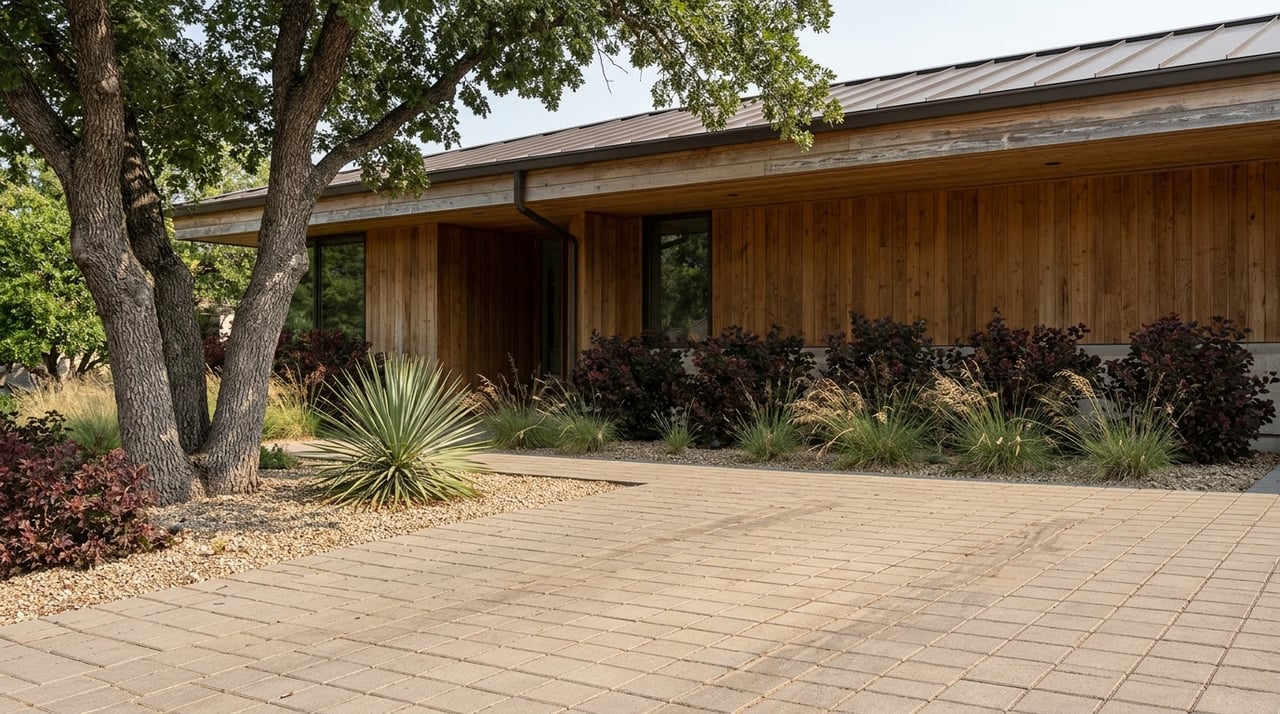
In Highlands Ranch, lower-water landscaping is not just a style choice. It is often the most practical response to climate, maintenance, and long-term yard performance.
Highlands Ranch Water defines ColoradoScape as a low- to very-low-water landscape that blends with native Colorado conditions, uses hardscape with landscape materials, and keeps plant material maintained in its natural form. Before starting a conversion, homeowners need approval from both Highlands Ranch Water and HRCA.
Water-wise does not have to mean bare or overly hardscaped. In fact, Highlands Ranch Water says converted areas should be at least 75% plant material at maturity, which supports a landscape that still feels soft, layered, and visually connected to Colorado’s natural setting.
Colorado State University Extension also recommends mulch, drip irrigation, phased conversions, and grouping plants with similar water needs. These steps can help you create distinct outdoor "rooms" for dining, relaxing, and circulation without turning the yard into a high-maintenance project.
A smart Highlands Ranch landscape is usually not all turf or no turf. CSU notes that turf still serves an important role as people space and can help reduce erosion and runoff while also supporting fire defense.
The key is to keep lawn where you will actually use it. A smaller, intentional turf area for play, pets, or open seating often works better than a large lawn that demands more water and care than your lifestyle really needs.
If you are planning a ColoradoScape conversion, timing matters. Highlands Ranch Water recommends avoiding peak summer heat and suggests installation windows of May 15 to June 30 and Sept. 1 to Oct. 15.
That schedule can help plants establish more successfully and reduce stress during the hottest stretch of the season. It is also a good reminder that the best outdoor projects are usually planned ahead, not rushed.
Homes that back to open space can be especially appealing in Highlands Ranch, but they also require a more careful design approach. Metro District rules prohibit extending landscaping, irrigation, gardening, retaining walls, structures, or storage onto district land beyond the private fence line.
That means a successful yard edge should look clean and intentional without appearing to push into shared land. Simple fence-line transitions, tidy drainage details, and thoughtful privacy screening tend to work better than sprawling beds or improvements that blur the property boundary.
The district describes nearby open space as short grass prairie with native plants, trail mows, and fence-line management. A backyard that respects that backdrop often feels more natural and more polished than one that tries to overpower it.
In practical terms, this can mean using restrained planting palettes, clean edging, and outdoor features that frame the view rather than compete with it. For higher-end homes, this kind of discipline often reads as more custom and better considered.
Before you build, expand, or rework outdoor space in Highlands Ranch, check the review path. HRCA requires approval for items that may include decks, patios, paving and hardscape, drainage changes, solid patio covers, and permanent outdoor fireplaces.
Douglas County also lists decks and patio covers as permit categories and reminds property owners to locate utilities and easements before excavation. If your project includes structural work, roofed elements, or drainage changes, it is smart to confirm requirements early rather than after plans are underway.
Not every backyard improvement adds value in the same way. In Highlands Ranch, the strongest upgrades are usually the ones that make the space easier to use, easier to maintain, and more consistent with the home’s overall finish level.
That often means buyers respond best to improvements like a covered patio, a well-scaled hardscape layout, subtle lighting, and a clean low-water landscape plan. These choices tend to photograph well, show well, and support the kind of turnkey feel that helps a home stand out.
For sellers, there is also a presentation advantage. When exterior spaces feel designed instead of improvised, the whole property reads as more complete. That matters in a market where buyers are often comparing not just square footage, but lifestyle quality.
The most appealing outdoor spaces are the ones you can realistically maintain. Douglas County describes wildfire mitigation as an ongoing responsibility and says defensible space starts at the home and works outward.
That is a useful lens for any outdoor project in Highlands Ranch. Clean edges, manageable plantings, right-sized turf, and thoughtful spacing can support both appearance and long-term upkeep.
If you are thinking about outdoor upgrades with future resale in mind, it helps to look at them the same way a buyer will. Comfort, finish quality, and maintenance all matter, and the best results usually come from improvements that fit the property, the lot, and the way people actually live in Highlands Ranch.
If you want guidance on which outdoor improvements are most likely to strengthen appeal for your specific home in Highlands Ranch, Charles Ward can help you evaluate upgrades through both a construction and resale lens.
Stay up to date on the latest real estate trends.

Contact Charles today to learn more about his unique approach to real estate, and how he can help you get the results you deserve.
5600 S QUEBEC ST STE 150D GREENWOOD VILLAGE CO 80111