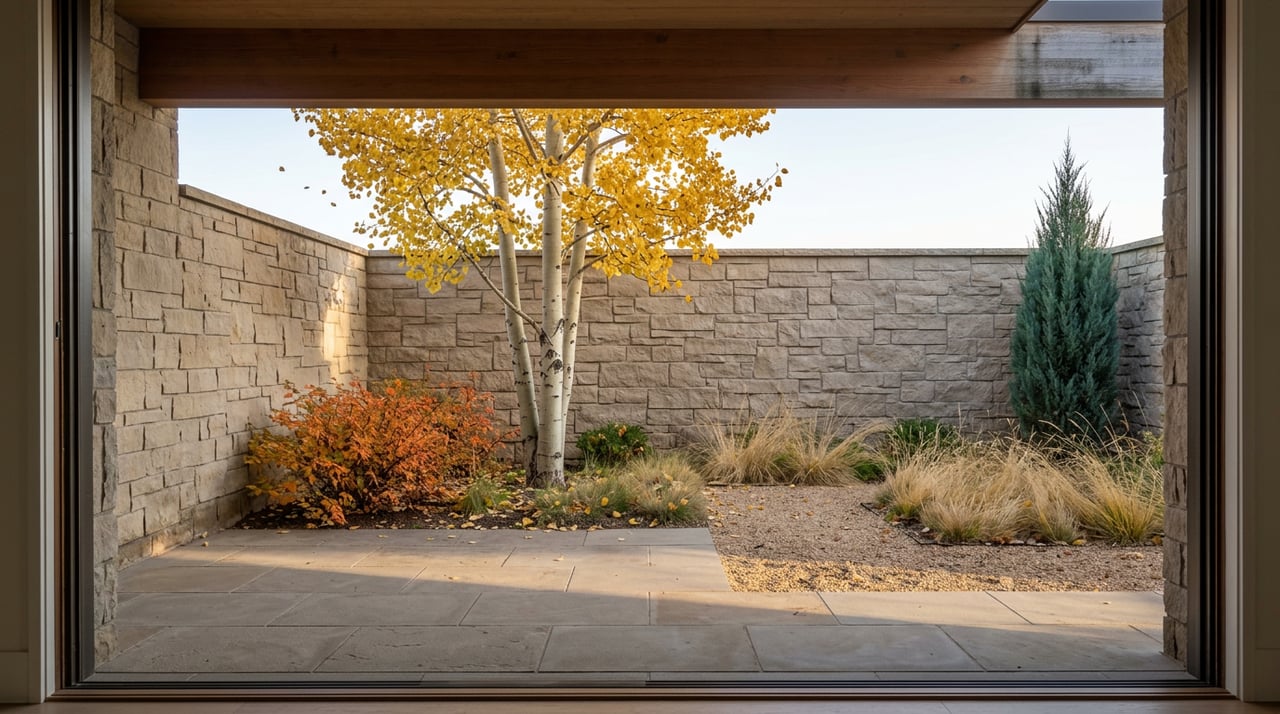
Littleton's Real Fall Season Starts West of Main Street
September 17, 2026
September 17, 2026
If you have lived in Littleton through more than one summer, you already know the rhythm. Main Street gets the parade, the wine walks, the illuminated evening everyone posts about. So where does the town actually spend its October weekends?
Not on Main Street. The answer sits a mile or two west, along the South Platte River, where a 30-acre garden, a pair of pioneer farms, and a park amphitheater have quietly become the place residents actually show up this time of year. Understanding why tells you something about how this town allocates its attention, and its money, that the summer calendar never quite explains.
Four places carry Littleton's fall weight this year: the Littleton Museum's working farms, Hudson Gardens on South Santa Fe Drive, Denver Botanic Gardens' Chatfield Farms location, and Clement Park's Grant Amphitheater. None of them sit downtown. All of them draw a river-adjacent, west-side stretch of the city that most visitor guides treat as an afterthought to Main Street.
That framing has it backward. The evidence is in how one of these venues got built up in the first place.
Hudson Gardens started small. Colonel King C. Hudson and Evelyn Leigh Hudson developed it as a five-acre private garden back in 1941. It grew into the 30-acre public space that opened to visitors in June 1996, and for years its identity ran through summer. A concert series filled the lawn every warm-weather season until it ended in 2020.
What replaced that identity is the part most residents have not connected to a city budget line. In 2022, Littleton voters approved a 5 percent lodging tax, and the city named Hudson Gardens one of four Tier 1 major cultural assets under that program, a designation worth $100,000 in annual municipal funding for both 2025 and 2026. That is a public financing decision, not an accident of programming. It is also the reason a venue that used to close its most popular season by Labor Day now runs its biggest draw of the year from late September through the start of November.
This fall's version of that draw is Magic of the Jack O'Lanterns, which opens Friday, September 18, and runs through November 1. The festival features 7,000 hand-carved pumpkins arranged along a glowing trail, with displays including a pirate ship and a nautical seascape, plus a synchronized light show timed to music roughly every 30 minutes. New for 2026 is Enchanted Hollow, a one-third-mile trail extension of additional glowing scenery folded into the same ticket, according to a recent report from local outlet Hoodline. The lodging tax money did not create this event out of nothing. It gave a garden that lost its summer signature the budget to build a fall one instead.
| Venue | 2026 Dates | What's There | What's New |
|---|---|---|---|
| Hudson Gardens | Sept 18 to Nov 1 | Magic of the Jack O'Lanterns, 7,000 hand-carved pumpkins, synchronized light show | Enchanted Hollow, a new one-third-mile trail add-on |
| Littleton Museum | Sat, Oct 10, from 10 a.m. | Harvest Festival across two working pioneer farms | Same living-history format the museum runs each fall |
| Chatfield Farms | Annually in October | Pumpkin Festival with live music, vendors, pony rides | Held at Denver Botanic Gardens' Chatfield Farms site |
| Clement Park, Grant Amphitheater | Sun, Oct 11, from noon | Littleton Fall Festival | Confirmed date for 2026 |
Set the Littleton Museum's Saturday against the Fall Festival's Sunday and you get back-to-back weekend mornings on opposite sides of town from Main Street, a full week before Hudson Gardens even reaches its Halloween peak. That is not a coincidence of scheduling. It is what a corridor with its own funding and its own momentum looks like when nobody is trying to compete with downtown for attention.
The Littleton Museum's Harvest Festival works because the museum built something downtown cannot replicate: two reconstructed 19th-century working farms, one representing the 1860s and one the 1890s, staffed by costumed interpreters who spend the day doing the actual chores of a pioneer harvest. That means threshing grain by hand, working a scythe, and pressing apples into fresh cider rather than performing a scripted reenactment.
This year's Harvest Festival runs Saturday, October 10, starting at 10 a.m. It is the kind of event where the draw is not novelty but repetition done well. The farms exist year round. The festival is simply the day the museum opens them up for hands-on demonstration instead of static display, which is a different kind of fall entertainment than anything a Main Street storefront can offer.
Denver Botanic Gardens' Chatfield Farms location, out on Deer Creek Canyon Road, runs its own Pumpkin Festival each October with live music, local vendors, and pony rides for younger kids. It is a longer drive than the museum or Hudson Gardens, but it belongs to the same west-side pattern: family programming built around agricultural space rather than retail storefronts.
Closer to the center of town, Clement Park's Grant Amphitheater hosts the Littleton Fall Festival on Sunday, October 11, starting at noon. Clement Park already carries a lot of the city's outdoor recreation traffic year round, and putting a dedicated fall event on its amphitheater stage adds a second west-side anchor within a day of the museum's Harvest Festival.
Put those four together and the geography stops looking like scattered listings and starts looking like a deliberate corridor. Hudson Gardens sits directly on the South Platte River. The museum and Clement Park sit in the same general stretch of the city, away from the Main Street business district that owns the summer calendar. Fall in Littleton has developed its own center of gravity, and it is not downtown.
None of this replaces what Main Street does well. The wine walks and the summer festival calendar are not going anywhere, and downtown will still be the place for a Friday dinner out. But if you have been treating October as a quieter stretch between summer events and the holiday light shows, the corridor along the river says otherwise. The investment, the funding, and the new programming this year are happening west of Main, not on it.
That kind of local pattern, where a city's public spending decisions reshape which parts of town actually earn foot traffic, is the same lens worth applying to a home's value over time. If you are curious what a shift like this means for a specific property in Littleton, Charles Ward puts together a complimentary home valuation that accounts for exactly this kind of neighborhood detail. Request one when you are ready to see where your home stands.
Stay up to date on the latest real estate trends.

Contact Charles today to learn more about his unique approach to real estate, and how he can help you get the results you deserve.
5600 S QUEBEC ST STE 150D GREENWOOD VILLAGE CO 80111